Kidney Stone Treatment in London
Kidney stones can cause severe pain, but they can usually be treated effectively. Many smaller stones pass naturally, while larger stones or stones causing a blockage may need active treatment. Understanding why a stone has formed is also an important part of reducing the risk of it happening again.
Our consultant urologists offer assessment, treatment options and tailored prevention advice for kidney stones in London.
What are kidney stones?
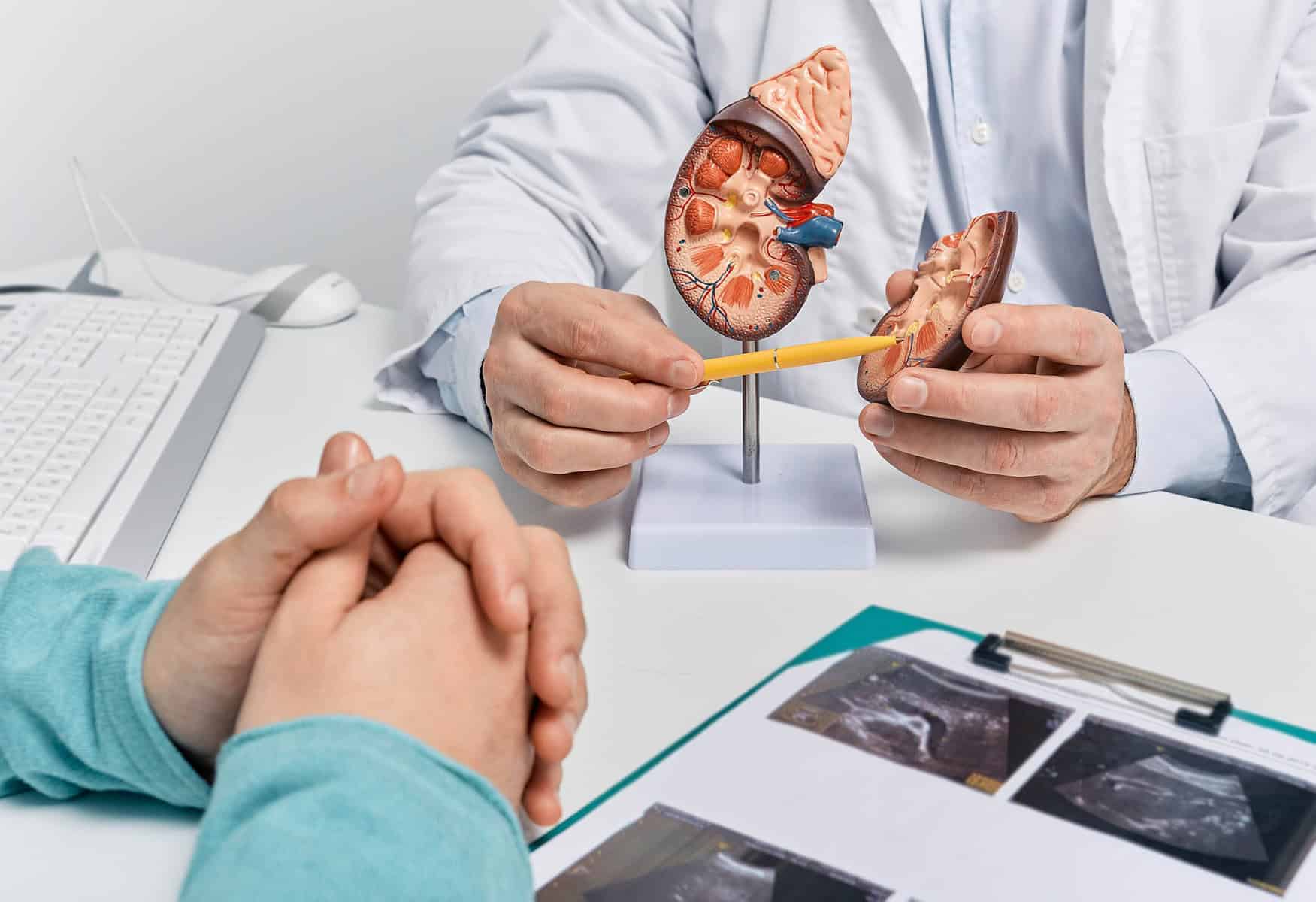
Kidney stones are hard deposits that form when minerals and salts in the urine crystallise. They may be very small, similar in size to a grain of sand, or larger stones that take up part of the kidney.
Small stones can sometimes pass without a procedure. However, a stone may become lodged in the ureter, the tube that carries urine from the kidney to the bladder. This can cause intense pain and may prevent urine from draining normally.
The typical symptom is sudden, severe pain in the side or lower back, known as renal colic. The pain can come in waves and may spread towards the lower abdomen or groin. Some people also notice blood in their urine, feel sick or need to pass urine more often.
Many kidney stones contain calcium, although other types can form. Not drinking enough fluid, diet, certain medicines, medical conditions and family history can all contribute. Your consultant will focus on managing the immediate problem and, where possible, identifying the factors that may be contributing to stone formation.

Common symptoms
Severe pain
Sudden, intense pain in the side or back that can come and go in waves. The pain may move towards the lower abdomen or groin.
Blood and urinary changes
Blood in the urine, cloudy urine, a stronger smell than usual or needing to pass urine more frequently or urgently.
Nausea and infection signs
Feeling or being sick can happen alongside stone pain. Fever, shivering or feeling very unwell may indicate infection and needs urgent medical assessment.
Why do kidney stones form?
Several factors can increase the likelihood of stones developing. Understanding your individual risk factors can help guide prevention.
Dehydration
Not drinking enough fluid can make urine more concentrated, making it easier for crystals to form.
Diet
A diet high in salt, animal protein or certain other components may increase the risk of some stones.
Metabolic and genetic factors
Some people have an inherited tendency to form stones or metabolic factors that change the balance of minerals in their urine.
Medical conditions
Recurrent urine infections, some medical conditions and certain medicines can also contribute to stone formation.
If you have severe pain with fever, are unable to pass urine, are passing large amounts of blood or feel very unwell, seek urgent medical care rather than waiting for symptoms to improve.
How we assess kidney stones
Your consultant will assess your symptoms, medical history and any previous stones. Tests may be recommended to confirm whether a stone is present, establish its size and location, and check whether it is affecting kidney drainage.
Urine and blood tests
These can check for infection, blood in the urine and signs that the kidneys may be under strain.
Imaging
A CT scan, ultrasound or other imaging may be used to identify the size and position of a stone and help guide treatment decisions.
From assessment to treatment
Treatment is guided by the size, position and type of stone, as well as your symptoms and general health. Small stones may pass naturally with observation, pain relief and, in some cases, medication to help the ureter relax.
If a stone is unlikely to pass, is causing persistent symptoms or is blocking the kidney, your consultant will discuss the procedures that may be appropriate. Once the immediate stone has been managed, prevention planning can help reduce the risk of recurrence.
Our kidney stone treatments
Shockwave lithotripsy ESWL
Focused shockwaves are used to break a stone into smaller pieces so they can pass more easily in the urine. This does not involve an incision.
Ureteroscopy and laser
A fine telescope is passed through the urinary tract to reach the stone. A laser can then break it into smaller fragments for removal or natural passage.
Percutaneous nephrolithotomy PCNL
Percutaneous nephrolithotomy, or PCNL, is a keyhole procedure used to remove larger or more complex kidney stones through a small opening in the back.
Ureteric stent
A ureteric stent is a thin tube placed inside the ureter to help keep it open and allow the kidney to drain. It may be used to relieve a blockage or alongside stone treatment.
Stone prevention programme
A metabolic assessment and individual prevention plan can help identify why stones are forming and support steps to reduce the chance of future episodes.
Choosing the right treatment
There is no single treatment that is right for every kidney stone. The best approach depends on where the stone is located, its size and composition, whether it is causing a blockage and the impact it is having on you.
Smaller stones often pass without a procedure. When active treatment is needed, options can range from shockwave lithotripsy to ureteroscopy with laser treatment or PCNL for larger or more complex stones. A ureteric stent may be needed in some circumstances to relieve obstruction or support drainage.
As kidney stones can recur, clearing the existing stone is only one part of your care. Identifying possible causes and following tailored prevention advice can help reduce the risk of another stone forming.
Why choose The Forbury Clinic for kidney stones treatment in London?
Treatment options matched to the stone
From non-invasive shockwave treatment to keyhole procedures, your consultant will recommend an approach based on the stone and your circumstances.
Consultant-led assessment
You will be assessed by a consultant urologist who can explain your imaging findings and the appropriate next steps.
Prevention built into your care
We look beyond the immediate stone to consider why it may have formed and how future episodes may be reduced.
Direct access in London
Self-referral is welcome for appointments at The Forbury Clinic, 45 Queen Anne St, London W1G 9JF.
Frequently asked questions
Will my kidney stone pass on its own?
Many smaller stones pass naturally with time, fluids and pain relief. Some people may also be offered medication to help the stone pass. Larger stones, stones causing a blockage or stones linked to infection may need active treatment. Your consultant will advise based on your imaging and symptoms.
How are kidney stones diagnosed?
Diagnosis usually involves discussing your symptoms, urine and blood tests, and imaging such as a CT scan or ultrasound. Imaging shows the size and position of the stone and helps guide treatment.
Do kidney stones come back?
Kidney stones can recur. Understanding the type of stone and any factors contributing to its formation can help you make changes that may reduce the risk of future stones.
When is kidney stone pain an emergency?
Severe pain alongside a high temperature, shivering or feeling very unwell may indicate an infected, blocked kidney and needs urgent medical care. You should also seek urgent help if you are unable to pass urine.
Do I need a GP referral?
No. You are welcome to self-refer and arrange a consultation directly with our team.

Treat the stone and help prevent the next one
If you are dealing with kidney stone symptoms or repeated stones, our consultant urologists can help you understand the cause, discuss treatment options and plan the appropriate next steps.
- AppointmentBook a consultation
- Reception0118 920 7055
- Location
The Forbury Clinic London, 45 Queen Anne St, London, W1G 9J