Pure Tone Audiometry Test
Our consultant-led Audiology team at The Forbury Clinic provides comprehensive hearing tests and assessments in a calm, professional setting. Pure tone audiometry is conducted using advanced equipment to ensure accurate, repeatable results that reflect your true hearing ability.

What is Pure Tone Audiometry?
A pure tone audiometry test is a key diagnostic tool used to measure how well you hear different sound frequencies and volumes. It helps identify the degree and type of hearing loss by detecting the quietest sounds you can hear. This type of assessment is often the first step in understanding changes in hearing and can guide hearing aid fitting, medical treatment or further audiological investigation.
It is a standard hearing assessment that measures your hearing thresholds – the quietest sounds you can detect at different pitch levels. The test helps determine whether your hearing levels fall within a normal range or if hearing loss is present.
This type of testing is vital for diagnosing hearing conditions, identifying where sound detection is affected (in the middle or inner ear), and supporting decisions about the need for hearing aids, medical treatment or further testing such as tympanometry.

How Does a Pure Tone Hearing Test Work?
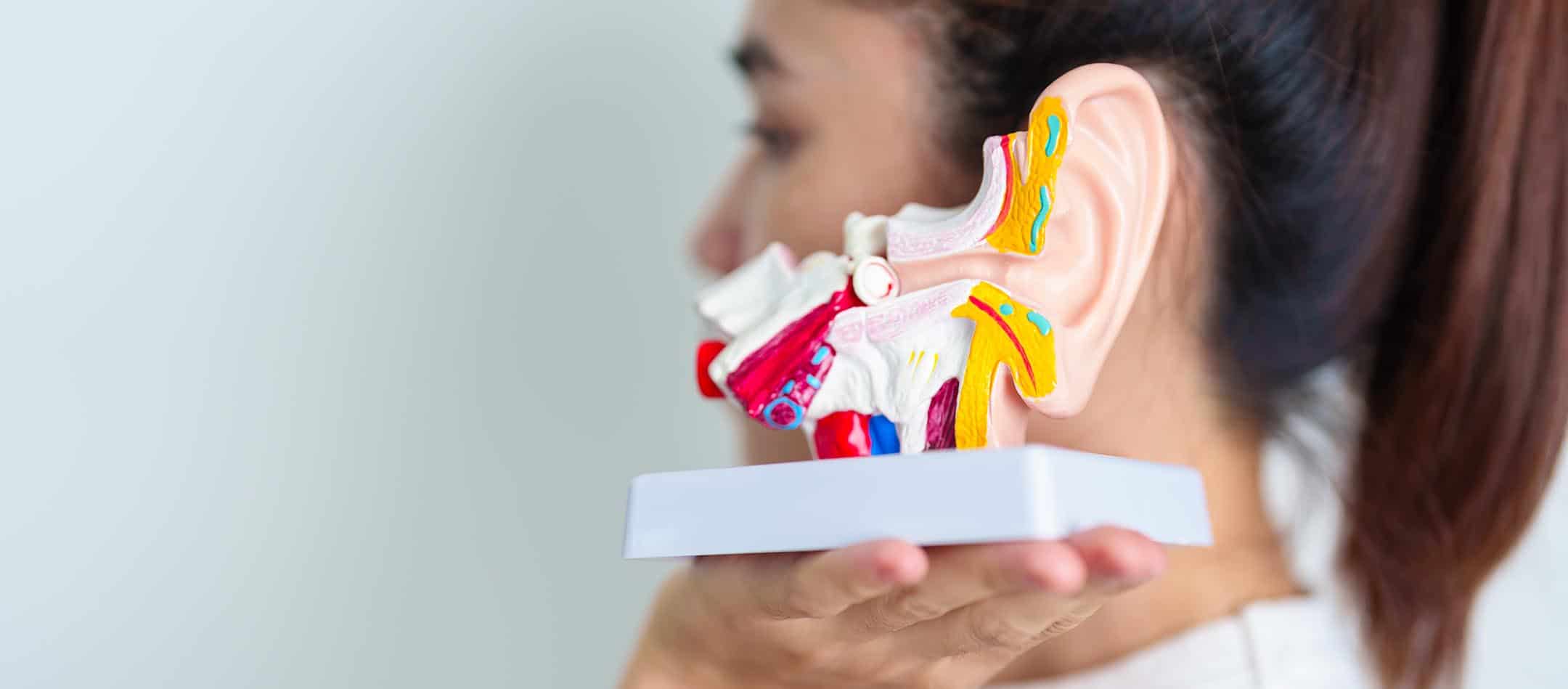
During the test, you will wear headphones or ear inserts in a quiet, soundproof room. The audiologist plays a series of pure tones (single-frequency sounds) at different pitches and volumes. Each time you hear the tone, you’ll press a button or raise your hand to indicate you heard it.
The test measures the quietest sound you can hear at multiple frequencies for both ears. The results are plotted on a graph called an audiogram, giving a detailed picture of your hearing profile across the frequency range of human hearing.
Understanding Your Audiogram Results
The audiogram is a visual chart showing how well you hear across low, mid and high frequencies. The vertical axis represents sound volume (loudness in decibels), while the horizontal axis represents pitch (frequency in hertz).
- Normal hearing: tones detected between 0 and 20 decibels (dB)
- Mild hearing loss: 20–40 dB
- Moderate to severe hearing loss: higher decibel levels needed to hear tones
Your audiologist will explain your results clearly, describing which sounds are more difficult for you to hear and what this may mean for everyday listening.
How Long Does the Test Take?
A pure tone audiometry test usually takes around 20 to 30 minutes, depending on your hearing history and any additional tests performed during your visit. The procedure is comfortable, straightforward and completely painless. Results are available immediately for discussion on the same day.
Is the Test Suitable for Children?
Pure tone audiometry can be performed on both adults and children aged around five years and above, provided they can follow basic instructions. For younger children or infants, alternative hearing assessments (such as Visual Reinforcement Audiometry (VRA)) may be used.

Why Choose The Forbury Clinic?
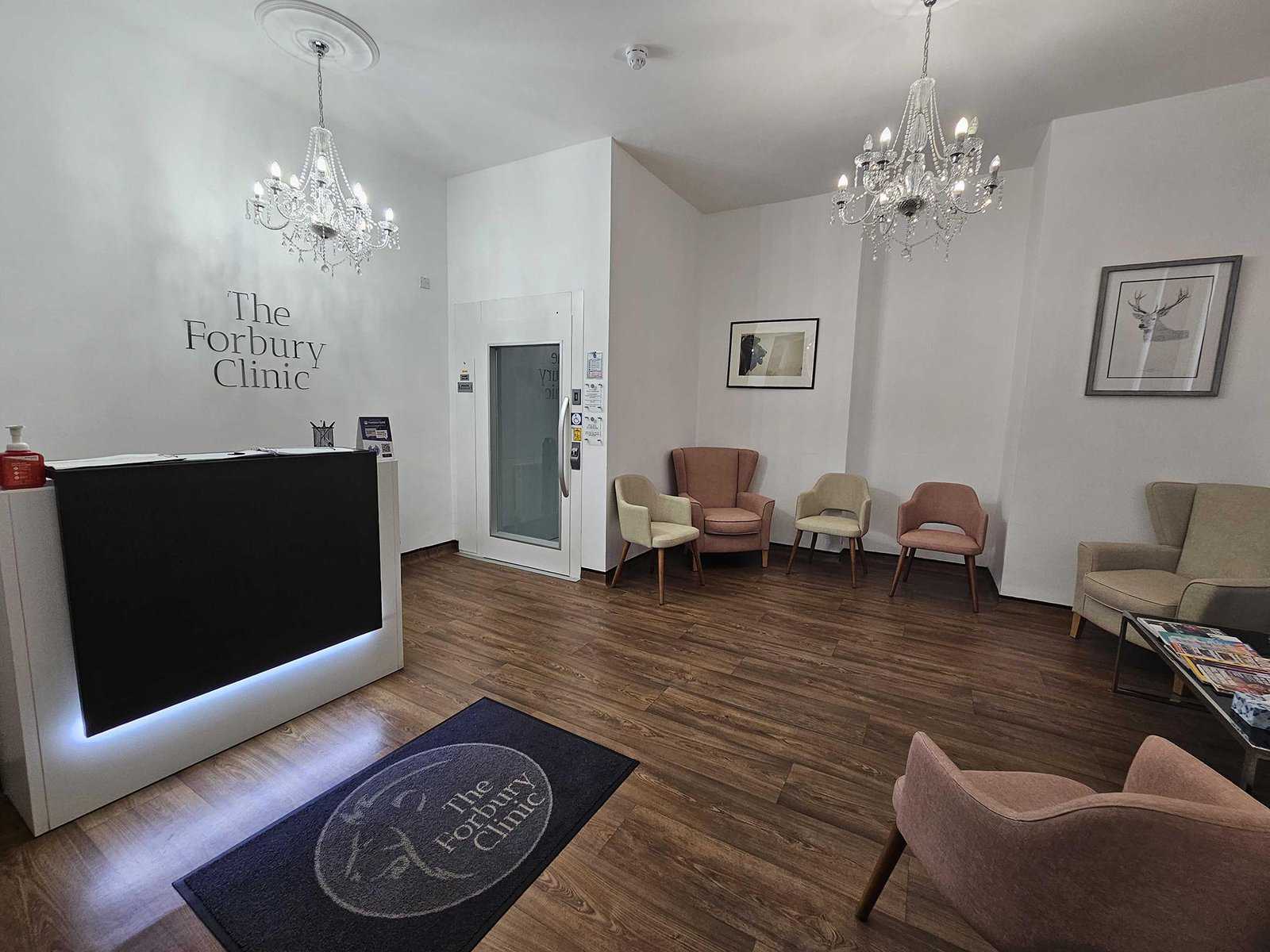
The Forbury Clinic offers consultant-led audiology services with an emphasis on comfort, accuracy and patient reassurance. Our diagnostic hearing tests are performed using calibrated technology, with results explained clearly so you can make informed decisions about next steps for your hearing health.
If you would like to arrange a pure tone audiometry test in Reading, contact us to book an appointment with our audiology team.
Pure Tone Audiometry Test FAQs
- What does pure tone audiometry measure?
The test measures how quietly you can hear sounds at a range of frequencies. It identifies hearing thresholds and helps determine whether hearing loss is mild, moderate or severe.
- What does an audiogram show?
An audiogram charts your hearing sensitivity across different frequencies for each ear. It helps the audiologist pinpoint the type and degree of hearing loss present.
- What do normal hearing results look like?
Normal hearing is shown on an audiogram between 0 and 20 decibels across frequencies. Anything above this range can indicate some degree of hearing loss.
- Is a pure tone audiometry test painful?
No. The test is entirely non-invasive and painless. You simply listen to a series of tones through headphones and signal when you hear them.