Male Urinary Incontinence Treatment London
Male urinary incontinence can feel difficult to discuss, particularly when it affects work, exercise, social plans or confidence. Whether leakage began after prostate surgery, comes with a sudden urge to pass urine or involves dribbling and difficulty emptying the bladder, there is usually an underlying cause to investigate and treatment options to consider.
Our consultant urologists provide discreet, personalised assessment for men with urinary incontinence in London. We will identify the type of leakage you are experiencing and explain the treatment approaches that may be suitable for you.

Understanding incontinence in men
Male urinary incontinence can take different forms. The most common patterns are stress incontinence, urge incontinence and overflow leakage.
Stress incontinence is leakage that happens when pressure increases in the abdomen, for example when coughing, lifting, exercising or moving suddenly. It can develop after prostate surgery, including surgery for prostate cancer, when the muscles and tissues that support urinary control have been affected.
Urge incontinence is different. It involves a sudden and difficult-to-control need to pass urine, sometimes followed by leakage before you reach the toilet. It is often linked to an overactive bladder, where the bladder muscle contracts too soon.
Overflow leakage may cause dribbling, a poor urinary flow and a feeling that the bladder never empties fully. In men, it can be associated with a blockage to urine flow, often caused by an enlarged prostate.
As these patterns have different causes, a clear diagnosis is essential. Some men may experience more than one type of incontinence. Your consultant will assess what is happening and discuss an appropriate plan, beginning with the least invasive options where suitable.

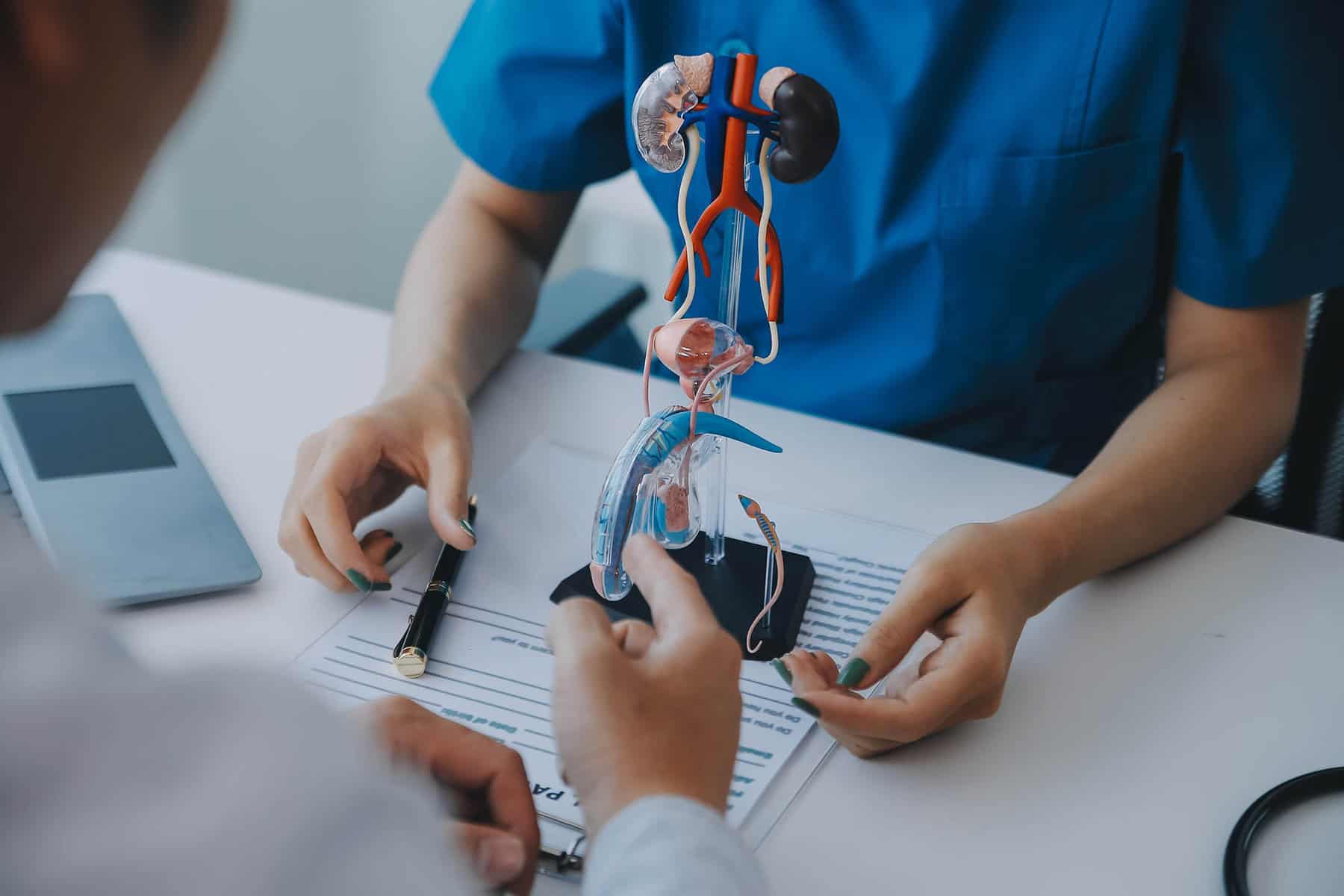
How we assess male incontinence
Straightforward tests can help establish the cause of leakage and guide the next stage of care.
Flow and emptying tests
A urine flow test and bladder scan can assess the strength of your stream, how effectively your bladder empties and whether obstruction may be contributing to symptoms.
Urine testing
A urine sample can check for infection, blood or other changes that may need further attention.
Urodynamic testing where needed
For more complex symptoms or leakage after prostate surgery, urodynamic testing may be recommended. This assesses how the bladder stores urine and how the bladder outlet is functioning.
From assessment to treatment
The first step is identifying the pattern and likely cause of your leakage. Your consultant will consider your symptoms, previous treatment, medical history and the results of any tests that are needed.
Treatment is then matched to the cause. Pelvic floor rehabilitation may be recommended for stress leakage, particularly after prostate surgery. Urge symptoms may be managed with treatments aimed at calming an overactive bladder. Where obstruction from an enlarged prostate is contributing, treatment may focus on improving bladder emptying.
If symptoms remain troublesome despite non-surgical care, further options, including surgery, can be discussed clearly and at the right time.
Treatments for male incontinence
Pelvic Floor Rehabilitation
A structured programme of pelvic floor muscle training. This is often an important first step for men experiencing stress leakage after prostate surgery.
Bladder Botox
Botox injections into the bladder muscle may help reduce urgency and urge leakage for some men with an overactive bladder.
Nerve Stimulation
Neuromodulation is a drug-free treatment that aims to influence the nerve signals involved in bladder control. It may be considered for some men with persistent urge symptoms.
Male Sling
A male sling is a surgical option that supports the urethra and bladder outlet. It may be considered when stress leakage continues after prostate surgery.
Artificial Urinary Sphincter
An artificial urinary sphincter is an implanted device designed to help control the flow of urine. It may be considered for men with more severe or persistent stress incontinence when other treatments have not provided sufficient improvement.
Why choose The Forbury Clinic for male incontinence in London?
Cause first, treatment second
Your consultant will identify the likely type and cause of incontinence before recommending a treatment approach.
Support after prostate surgery
From pelvic floor rehabilitation to surgical options, we can discuss care for persistent leakage following prostate treatment.
Options for different levels of severity
Whether symptoms involve occasional leakage or have a more significant daily impact, your consultant can explain the options that may be appropriate.
Discreet and direct
Urinary incontinence can be sensitive to discuss. Our team provides confidential, respectful care at The Forbury Clinic London.
Frequently asked questions
Is leaking urine after prostate surgery normal?
Some leakage is common in the early period after prostate surgery and may improve over time, particularly with pelvic floor rehabilitation. If symptoms persist or are affecting your quality of life, it is worth arranging an assessment to discuss the available options.
What is an artificial urinary sphincter?
An artificial urinary sphincter is a small implanted device that helps control urine flow by supporting the urethra. It may be considered for more severe, persistent stress incontinence, particularly after prostate surgery. Your consultant will explain how it works, along with the potential benefits and risks, if it may be suitable for you.
Could an enlarged prostate cause urine leakage?
Yes. An enlarged prostate can prevent the bladder from emptying properly, which may lead to dribbling or overflow leakage. If assessment suggests this is contributing to your symptoms, your consultant may discuss treatment options for the prostate.
Do I need a GP referral?
No. You are welcome to self-refer and arrange a consultation directly with our team.

Get male incontinence properly assessed
If urine leakage is affecting your daily life, our consultant urologists can help identify the cause and discuss the next steps with you.
- AppointmentBook a consultation
- Reception0118 920 7055
- Location
The Forbury Clinic London, 45 Queen Anne St, London, W1G 9J