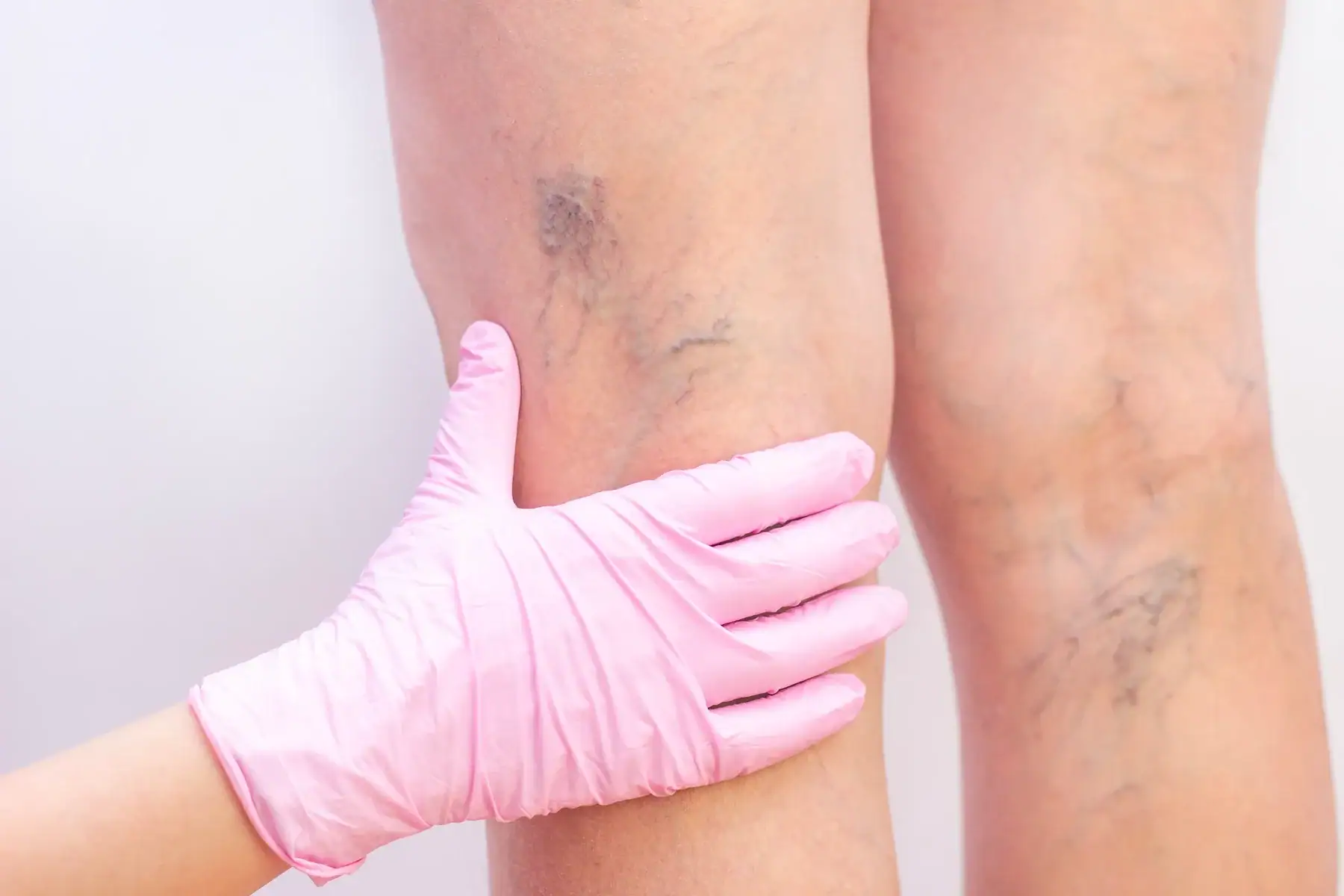
Varicose veins are enlarged, twisted veins that most often develop in the legs and feet. They can look blue, purple or skin coloured, and may appear raised or bulging beneath the skin.
For some people, varicose veins are mainly a cosmetic concern. For others, they cause aching, heaviness, itching, swelling or skin changes that affect comfort and daily life. In some cases, they can lead to complications that need prompt medical assessment.
Varicose veins treatment is not only about appearance. A clinical assessment can help establish whether the veins are causing symptoms, whether blood is flowing backwards through affected veins and which treatment, if any, may be appropriate.
Varicose veins stages and symptoms
Veins contain small valves that help blood travel back towards the heart. Varicose veins can develop when these valves do not close properly. Blood can then flow backwards and collect in the vein, causing it to stretch and become more visible.
Varicose veins symptoms vary considerably. Some people have visible veins with no discomfort, while others have symptoms even when the veins are less obvious.
Common symptoms include:
- Aching, heaviness or tiredness in the legs
- Throbbing, burning or itching around the veins
- Swelling around the ankles and lower legs
- Muscle cramps, particularly at night
- Restless or uncomfortable legs
- Symptoms that worsen after standing for long periods
Varicose veins can also progress over time. Early changes may include visible veins and mild discomfort. More advanced vein problems can cause swelling, brown skin discolouration, dry or itchy skin, eczema or tightening of the skin around the lower leg.
A venous leg ulcer is a break in the skin below the knee that does not heal. It can develop when long-term problems with blood flow affect the skin and surrounding tissues.
Not all varicose veins are a cause for concern. However, symptoms or changes in the skin can suggest that the veins need further assessment.
When to worry about varicose veins
Varicose veins are usually not dangerous in themselves. Sometimes, varicose veins are a sign of chronic venous insufficiency, where blood pools in the leg because it is not returning efficiently to the heart. Over time, this may contribute to skin damage, bleeding or ulcers.
Arrange a prompt assessment if you have varicose veins alongside:
- Persistent pain, aching, heaviness or swelling
- Itchy, dry or inflamed skin around the lower legs
- Brown or darkening skin discolouration
- Hard, tender veins or redness along a vein
- A sore or wound on the lower leg that is not healing
- Previous venous leg ulcers
- Varicose veins that bleed after being knocked or scratched
Bleeding from a varicose vein can be heavy because the vein is under pressure. If a vein starts bleeding, lie down, raise your leg and apply firm pressure with a clean cloth or dressing. Seek urgent medical help if the bleeding does not stop.
A painful, swollen, warm or red leg may have several possible causes. Deep vein thrombosis, often shortened to DVT, is a blood clot in a deep vein and needs urgent assessment. Seek urgent medical help if you develop sudden swelling or pain in one leg, especially if this occurs with chest pain, breathlessness or coughing up blood.
Varicose veins treatment options
The right varicose veins treatment depends on your symptoms, the pattern of blood flow in your veins and the results of an ultrasound assessment. A duplex ultrasound scan uses sound waves to show the veins and how blood is moving through them. It can help confirm whether valve problems, known as reflux, are present and support treatment planning.
Endovenous laser treatment and ablation
Endovenous treatment closes the affected vein from within. Using ultrasound guidance, a clinician places a fine tube into the vein and uses laser or radiofrequency heat to seal it. Blood is then redirected through healthier veins. This treatment is usually carried out using local anaesthetic and, where suitable, is often considered before older vein surgery.
Ultrasound-guided foam sclerotherapy
Ultrasound-guided foam sclerotherapy involves injecting a medication, mixed into a foam, into the affected vein. The foam causes the vein to scar and close, allowing blood to flow through other veins instead. It may be considered when endovenous heat treatment is unsuitable or for certain patterns of varicose veins, and some people may need more than one session.
Surgery
Traditional varicose vein surgery involves tying off and removing the affected vein. Modern endovenous treatments have reduced the need for this approach, but surgery may still be considered when laser treatment, other forms of endothermal ablation or foam sclerotherapy are not suitable.
Compression stockings and self-care
Compression stockings apply gentle pressure to the legs and can help ease swelling or discomfort. Staying active, avoiding long periods of standing where possible and raising your legs when resting may also help manage symptoms. However, stockings do not remove varicose veins or correct faulty valves, so they are not a long-term substitute for treatment where an intervention is clinically appropriate.
Private versus NHS varicose veins treatment and what to expect
NHS treatment is usually focused on varicose veins that cause symptoms or complications, rather than veins that are solely a cosmetic concern. Referral pathways and local eligibility criteria can vary.
A private assessment provides a direct route to discussing symptoms, arranging a duplex ultrasound where needed and understanding suitable treatment options. Start with a private GP appointment if you have leg symptoms and are unsure whether they may be related to varicose veins or another health condition.
Your assessment should include a discussion about your symptoms, medical history and any previous blood clots, vein treatment or leg ulcers. The clinician may examine your legs while you are standing, then arrange or review an ultrasound scan to assess blood flow.
If treatment is recommended, you should receive clear information about the procedure, alternatives, possible side effects and follow-up. No procedure can guarantee that new varicose veins will not develop in future.
Arrange an assessment for varicose veins
Varicose veins can be a cosmetic concern, a source of ongoing discomfort or a sign that the veins in your legs need further assessment. Pain, swelling, skin changes, bleeding or leg ulcers should not be ignored.
Contact The Forbury Clinic to discuss an assessment and the next appropriate step.