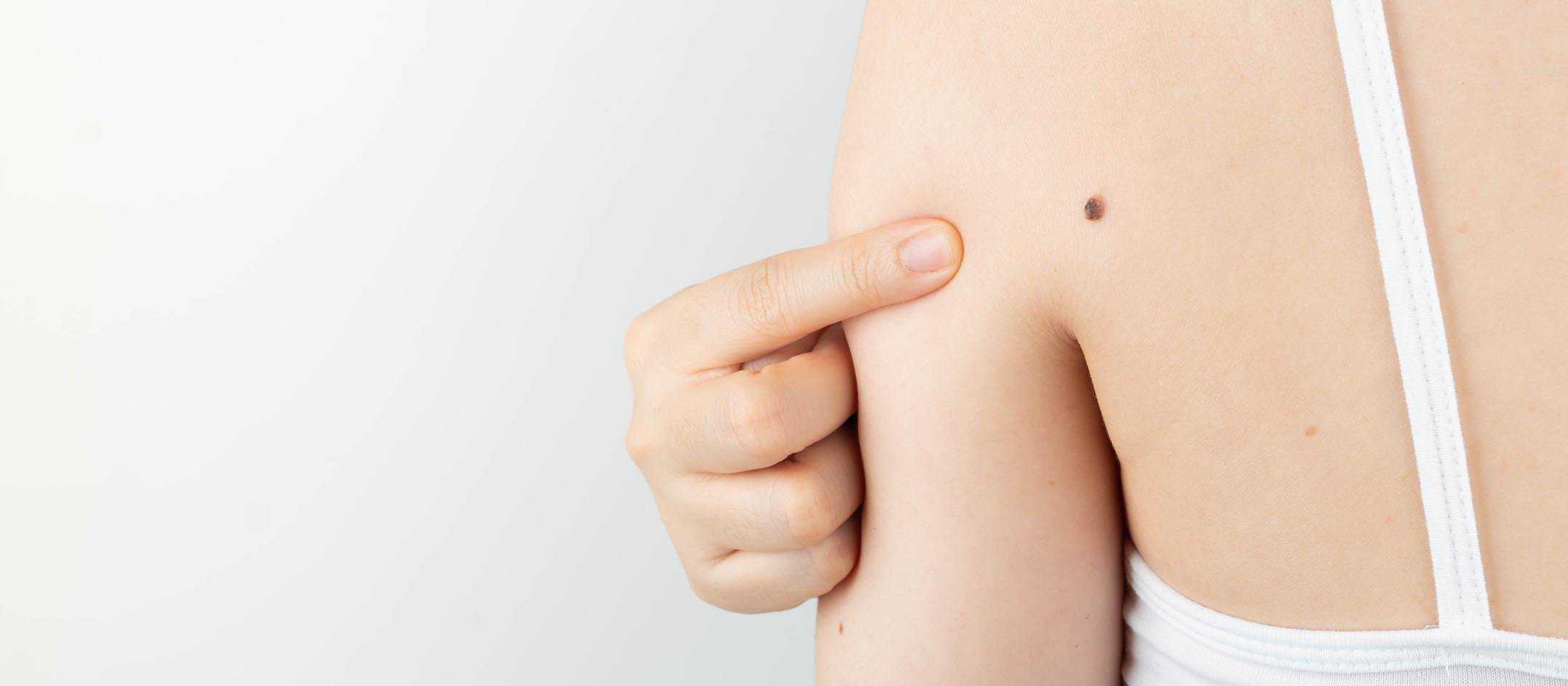
Finding a lump, bump or mark on your skin can be worrying, particularly when you are unsure what it is. Many types of skin lumps and bumps are harmless, but it is not always possible to identify them accurately from appearance alone.
Skin tags, cysts, lipomas and moles can all look and feel different. Some sit on the surface of the skin, while others develop underneath it. Some are soft and moveable, while others are smooth, raised or pigmented.
This visual guide offers a simple overview of common skin lumps. It is not a diagnosis. If a lump is new, changing, painful or concerning, an assessment at our private dermatology clinic can help provide clarity.
Skin tags
Skin tags are small, soft growths that hang from the skin. They can be skin coloured, slightly darker than the surrounding skin or vary in colour depending on your skin tone.
A narrow stalk often attaches a skin tag to the body. They commonly appear where skin rubs together, such as the neck, underarms, eyelids, groin or beneath the breasts. They are usually painless, although they can become irritated if they catch on clothing, jewellery or shaving equipment.
A skin tag differs from a cyst as it sits on the surface of the skin and often hangs slightly away from it. A cyst is more likely to feel like a rounded lump beneath the skin.
Cysts
A skin cyst is usually a round, smooth lump that forms just beneath the skin. It may feel firm or slightly soft to touch. Some cysts have a small dark dot, sometimes called a punctum, in the centre.
Many areas of the body can develop cysts, including the face, scalp, neck, chest and back. They often grow slowly. A cyst may become sore, swollen or red if it becomes inflamed or infected.
A cyst is usually closer to the skin surface than a lipoma. It may also feel more defined or firm. However, the differences are not always obvious without a clinical examination.
Lipomas
Lipomas are soft lumps made up of fatty tissue. They develop underneath the skin and usually grow slowly over time. They may feel soft, squashy or rubbery and often move slightly when pressed.
Lipomas can appear on different parts of the body, including the shoulders, arms, back, chest, thighs and buttocks. A lipoma is not usually painful, although a lump can cause discomfort depending on its size and location.
The key difference between a lipoma and a cyst is often the way it feels. A lipoma is usually deeper, softer and more moveable. A cyst may feel more like a distinct round lump closer to the skin.
Moles
A mole is a common mark on the skin made up of pigment-producing cells. Moles can be flat or raised. They may be pink, brown or darker than the surrounding skin.
Most moles are round or oval and have a fairly even shape and colour. They are often found on areas exposed to sunlight, but they can appear anywhere on the body. Unlike cysts and lipomas, a mole is usually a visible skin lesion rather than a lump growing beneath the skin.
A raised mole can sometimes be mistaken for a skin tag or another type of bump. A dermatologist can assess a mole closely, particularly if it is new or has changed.
Visit our mole removal page for further information about mole assessment and removal.
Skin tag vs cyst vs lipoma vs mole
| Type of skin lump or bump | Typical appearance | How it may feel | Common pattern |
|---|---|---|---|
| Skin tag | Small, soft growth that may hang from a narrow stalk | Soft and flexible | Often found in skin folds or areas of friction |
| Cyst | Rounded lump beneath the skin, sometimes with a central dark spot | Smooth, firm or slightly soft | May occur on the scalp, face, neck, chest or back |
| Lipoma | Smooth bulge under the skin | Soft, squashy and often moveable | Usually develops beneath the skin on the trunk or limbs |
| Mole | Flat or raised coloured mark | Usually part of the skin surface | Can occur anywhere on the body |
These features can be useful clues, but they are not a reliable way to diagnose a skin lesion. Other conditions can look similar, including warts, swollen glands, abscesses and less common growths.
Are skin lumps and bumps usually harmless?
Many skin lumps are harmless. Skin tags, uncomplicated cysts, lipomas and ordinary moles are common examples.
Even so, it is sensible to have a lump checked if you are unsure what it is. This is especially important if it has appeared recently or does not settle.
Avoid trying to cut, squeeze or remove a lump yourself. This can lead to bleeding, infection, scarring or delayed assessment of a skin concern.
When should a skin lump be checked?
Arrange a medical assessment if a lump or skin mark:
- Is new and unexplained
- Is getting bigger or changing in shape, colour or texture
- Is painful, red, warm or swollen
- Bleeds, crusts, itches or does not heal
- Feels hard and does not move
- Returns after previous removal
- Is causing discomfort or affecting daily life
Moles that change in size, shape or colour should be assessed. A new or changing mole requires prompt evaluation, particularly if it is bleeding, crusting or itchy.
If you have a sore or red lump that may be infected, seek urgent advice from your GP or NHS 111. If you feel seriously unwell or have symptoms of a severe allergic reaction, call 999 or attend A&E.
Get clarity about a skin lump or bump
It can be difficult to tell the difference between common skin lumps without an examination. A dermatology consultation can help identify the concern and explain whether any further assessment is needed.
If you have noticed a skin tag, cyst, lipoma, mole or another changing skin lesion, contact The Forbury Clinic to arrange a consultation.