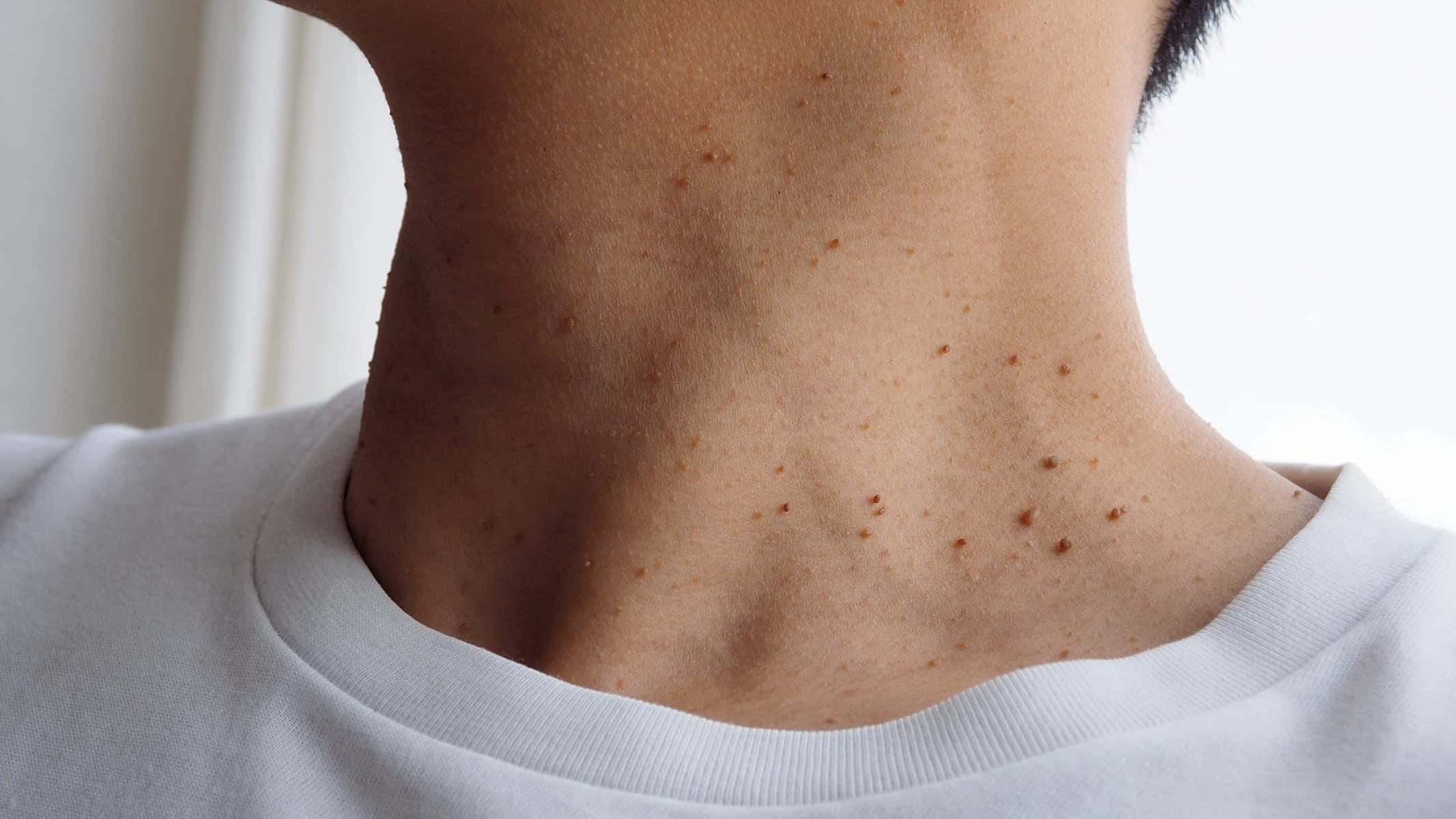
Skin tags are very common, benign skin growths that many people notice gradually over time. Although they are medically harmless, they can cause understandable concern, particularly if they appear suddenly, become irritated or are mistaken for something more serious. For some patients, they are simply uncomfortable due to friction or clothing.
Knowing what is normal, what warrants review and how skin tag removal is performed can make the process more straightforward and less concerning.
What Are Skin Tags?
Skin tags are small, soft, benign skin lesions that project from the surface of the skin. The medical term for a skin tag is acrochordon. They are typically flesh-coloured, light brown or slightly darker than the surrounding skin and may be attached by a narrow stalk.
Skin tags most commonly appear in areas where skin rubs together. Typical locations include the neck, armpits, groin, under the breasts and around the eyelids. They can occur as single lesions or in clusters. While they may vary in size, most are only a few millimetres in diameter.
Importantly, skin tags are not contagious and cannot spread from one area of the body to another through contact. They are classed as benign skin lesions and do not become cancerous. According to NHS guidance, skin tags are harmless growths that usually do not require treatment unless they cause discomfort or distress.
Although most skin tags are straightforward in appearance, it is sometimes difficult for patients to distinguish them from other types of skin lesions. For this reason, accurate assessment is important if there is any doubt.
Why Do Skin Tags Develop?
The exact cause of skin tags is not fully understood, but several factors are associated with their development.
Friction appears to be a significant contributor. Skin tags often form in folds of skin where rubbing occurs, such as the neck or armpits. Repeated minor friction may stimulate small areas of skin overgrowth.
Increasing age is another recognised factor. Skin tags become more common in adulthood and are frequently seen in middle age. They are less common in children, though they can occur.
There is also an association between skin tags and weight gain, as additional skin folds can increase friction. In addition, skin tags are more frequently observed in individuals with diabetes or insulin resistance. This does not mean that everyone with skin tags has an underlying metabolic condition, but it is a recognised association in dermatology practice.
The British Association of Dermatologists’ information leaflet notes that skin tags are benign and often linked to friction and metabolic factors.
It is important not to over-medicalise the presence of a small number of skin tags. In many cases, they are simply a normal variation in adult skin.
When Should a Skin Tag Be Assessed?
Most skin tags are harmless and do not require urgent treatment. However, correct diagnosis is important to exclude other conditions.
You should seek medical assessment if a lesion:
- Changes rapidly in size
- Alters in colour or shape
- Bleeds without injury
- Becomes persistently painful
- Does not look typical of a soft, pedunculated skin tag
- Occurs in someone with a personal or family history of skin cancer
While skin tags are benign skin lesions, other conditions such as certain moles or skin cancers can occasionally resemble them. Ensuring an accurate diagnosis provides reassurance and allows appropriate management.
If you are concerned about a changing lesion, further information is available on our Skin Cancer page. You can also explore our specialist Dermatology services for consultant-led assessment.
Recognition of potentially concerning skin changes is supported by NICE guidance on suspected cancer referral pathways.
Seeking assessment does not mean that something serious is suspected. In most cases, it confirms a benign diagnosis and provides reassurance.
Skin Tag Removal Options
Skin tag removal is generally straightforward when performed in a clinical environment. Although removal is often requested for comfort or reassurance, it should be carried out after appropriate examination.
The choice of method depends on the size, location and number of skin tags, as well as patient preference and medical factors.
Surgical Removal
Simple surgical removal involves carefully excising the skin tag after administering a local anaesthetic. This method is particularly suitable for larger or stalked lesions. The procedure is quick and usually completed in a single appointment. Minor scarring is possible but typically minimal.
Cautery
Cautery uses controlled heat to remove the lesion while sealing small blood vessels at the same time. It is often suitable for small to medium-sized skin tags and may reduce bleeding during the procedure.
Cryotherapy
Cryotherapy involves freezing the lesion with liquid nitrogen. It can be effective for selected cases, particularly smaller lesions, although it may not be ideal for larger or pedunculated skin tags.
Private skin tag removal is often sought when tags become irritated by clothing, jewellery or shaving. Some patients request removal for cosmetic reasons, while others seek reassurance that the lesion is benign.
Not every skin tag requires removal. In many cases, monitoring is entirely appropriate once a confident diagnosis has been made.
What to Expect at a Dermatology Appointment
During a dermatology consultation, the lesion will be examined carefully. A consultant dermatologist assesses its size, colour, surface features and attachment to the skin. The surrounding skin is also reviewed to identify any additional lesions or patterns.
If the diagnosis is clearly a skin tag, treatment options are discussed in a balanced and factual manner. In suitable cases, same-day removal may be possible. The procedure is typically performed under local anaesthetic, and patients are able to return home shortly afterwards.
If there is any uncertainty about the diagnosis, further investigation may be recommended. This could include a biopsy or referral for additional review. The priority is always diagnostic accuracy.
Assessment and Removal: Making an Informed Decision
Skin tags are common, benign skin lesions that rarely pose a health risk. However, changes in appearance, irritation or uncertainty about diagnosis warrant medical review. Proper assessment distinguishes harmless growths from conditions that may require further investigation.
Skin tag removal is usually a straightforward procedure when carried out in a clinical setting by an experienced practitioner. The choice of method depends on the individual case, and not all lesions require treatment.
Consultant-led dermatology care provides reassurance through accurate diagnosis and evidence-based management. For patients seeking private skin tag removal or clarification about a skin lesion, structured assessment ensures safe and appropriate care.
If you would like a consultant dermatologist to assess a skin lesion, contact our team and we will help you decide on the most appropriate next step.