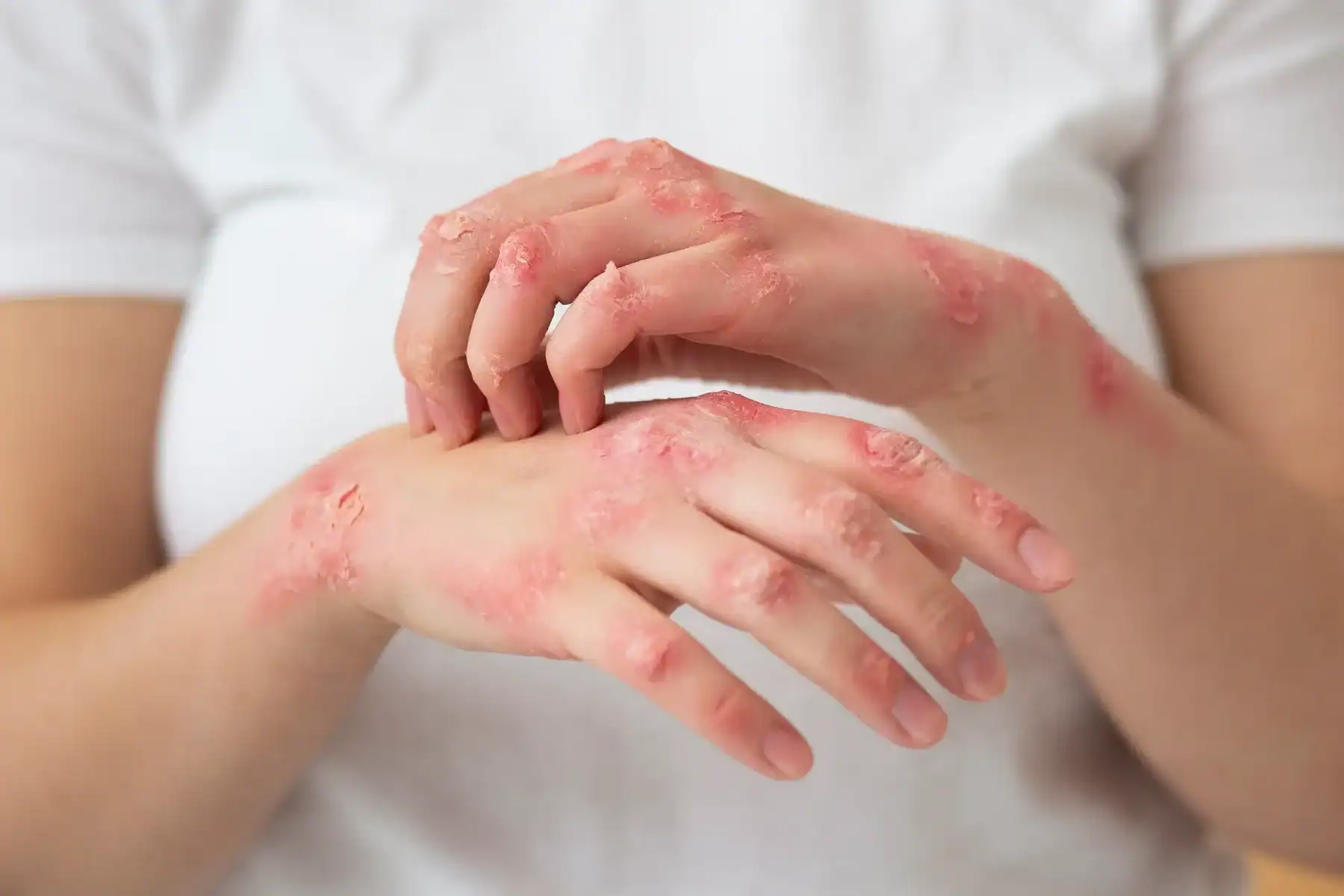
Psoriasis is a long-term inflammatory skin condition that causes patches of dry, flaky and sometimes sore skin. It can affect different parts of the body, including the elbows, knees, scalp, face and nails.
Psoriasis and eczema can both cause dry, itchy skin, which can make them difficult to tell apart. Psoriasis more often causes well-defined, thicker patches with scale, while eczema commonly causes dry, inflamed skin that is intensely itchy. The location, appearance and pattern of symptoms can offer useful clues, but a dermatology assessment may be needed for a clear diagnosis.
Psoriasis is not contagious. It cannot currently be cured, but treatment can help control symptoms and reduce flare-ups.
Psoriasis vs eczema: how to tell them apart
Psoriasis and eczema are both inflammatory skin conditions. They can look different on different skin tones and may affect the same areas of the body, but there are some common differences.
Psoriasis often appears as clearly outlined areas of thickened, dry skin. On lighter skin, plaques may look pink or red with silvery-white scale. On brown or black skin, they may appear grey, purple, dark brown or more deeply pigmented than the surrounding skin. Eczema can cause redness, dryness, cracking, weeping or crusting. It may be less sharply defined and can make the skin feel rough or sore.
Itching can occur with both conditions. Eczema is often very itchy, particularly during a flare-up. Psoriasis can itch too, but people may also describe stinging, soreness, tightness or discomfort from thick plaques.
The location can also differ. Psoriasis commonly affects the outer surfaces of the elbows and knees, the scalp, lower back and around the navel. Eczema is often found in skin folds, such as the inside of the elbows, behind the knees, on the hands or around the face and neck. These patterns are not absolute. Psoriasis can affect the face, skin folds and hands, while eczema can appear almost anywhere.
Both conditions can flare and settle over time. If you are unsure which condition you have, avoid assuming that an over-the-counter treatment is right for your skin. Read more in our guide to eczema: causes, flare-ups and treatment options.
Common types of psoriasis and triggers
Plaque psoriasis is the most common type. It causes raised, scaly patches called plaques, which may be itchy or sore. These can range from a few small patches to more widespread areas of affected skin.
Scalp psoriasis can cause thick scale, flakes and itching on the scalp. It may extend beyond the hairline or affect the skin behind the ears. It can sometimes be mistaken for dandruff or seborrhoeic dermatitis, but the appearance and treatment needs may differ.
Nail psoriasis can cause small dents or pits in the nail surface, discolouration, thickening, crumbling or lifting of the nail from the nail bed. Nail changes can be mistaken for a fungal nail infection, so assessment is useful before starting treatment.
Psoriasis on the face may appear around the hairline, eyebrows, forehead or sides of the nose. Facial skin is more delicate than skin on the elbows or knees, so it is important not to use strong treatments without clinical advice.
Psoriasis flare-ups can have different triggers for different people. Stress, skin injury, throat infections, smoking, alcohol, some medicines and cold weather can all be associated with flare-ups. Keeping a note of when symptoms worsen may help identify patterns, although it is not always possible to find a clear trigger.
Psoriasis treatment
Psoriasis treatment is tailored to the type of psoriasis, the areas affected, the severity of symptoms and the impact on your daily life. Topical treatments, meaning treatments applied directly to the skin, are usually the starting point. These may include emollients (moisturisers), alongside prescribed steroid treatments, vitamin D-based treatments or other medicated creams, lotions, ointments, gels or scalp preparations.
Treatment needs to be suitable for the body area involved. Treatments that are appropriate for thicker skin on the body or scalp may not be suitable for the face, skin folds or genital area. Following the instructions given by your clinician is important, especially when using steroid treatments.
If psoriasis is widespread, difficult to control with topical treatment or significantly affecting your quality of life, a dermatologist can discuss further options. These may include phototherapy, which uses carefully controlled ultraviolet light, or medicines that work throughout the body. The most appropriate approach depends on your individual assessment and treatment history.
Treatment can improve symptoms, but psoriasis often follows a relapsing pattern. This means that it can improve for a time and later flare again. A long-term plan can help you understand how and when to use treatment, as well as when to arrange a review.
When to see a private dermatologist about psoriasis
A dermatology clinic assessment is helpful if you are not sure whether you have psoriasis, eczema or another skin condition. It is also appropriate if your symptoms are persistent, widespread, painful, affecting your scalp, face or nails, or not improving with suitable treatment.
You should seek specialist advice if psoriasis is having a significant effect on work, sleep or emotional wellbeing. A dermatologist can also assess for possible psoriatic arthritis, which can cause joint pain, stiffness and swelling in some people with psoriasis.
Seek urgent medical advice if you develop widespread red skin, pus-filled spots across large areas of the body, fever or feel generally unwell. These symptoms need prompt assessment.
For more information about the process, read what to expect at your first dermatology appointment.
Arrange a psoriasis assessment
Living with persistent skin symptoms can be uncomfortable and frustrating. A private dermatology assessment can help clarify the cause of your symptoms and discuss suitable treatment options for your skin, scalp or nails.
Contact The Forbury Clinic to arrange a dermatology consultation.